Today In History: Frederick Douglass Speaks in Nantucket
But if a man is without education although without all his latent possibilities attaching to him, he is, as I have said, a pitiful object; a giant in body but a pigmy in intellect, and at best but half a man. Without education he lives in the narrow, dark, and grimy walls of ignorance. He is a poor prisoner without hope.-- Speech, "The Blessings of Liberty and Education," September 3, 1894, from Douglas Papers, series 1, 5:623. From In the Words of Frederick Douglass : Quotations from Liberty’s Champion, p.90.
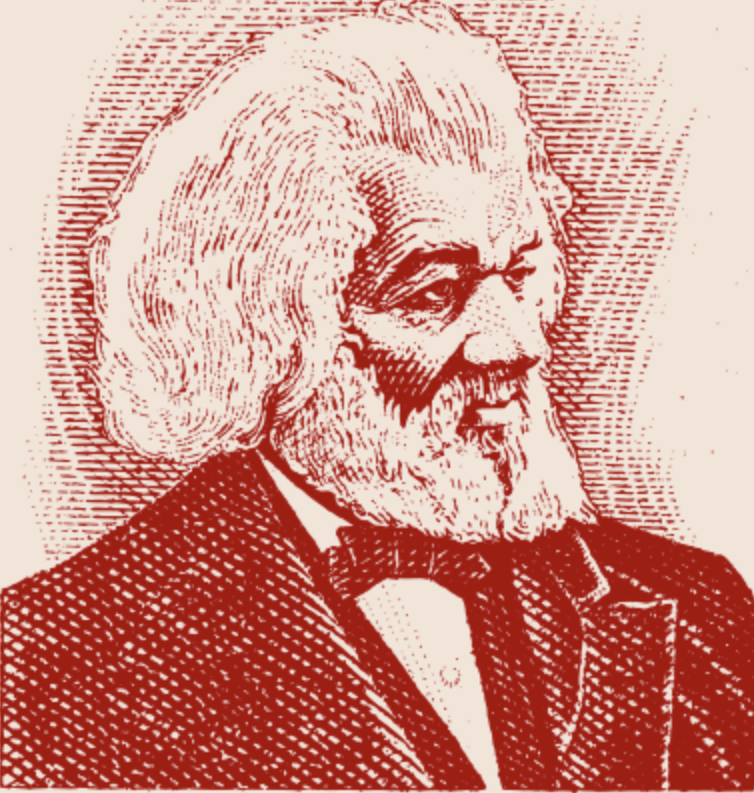
On August 11th, 1841, Frederick Douglass (born Frederick Augustus Washington Bailey) spoke before an audience in the North for the first time, giving an impactful account of his life in Maryland where he was born into slavery. His enslaved mother was of African descent and his father, possibly her white master. After he escaped to the North in 1838, he took on his new surname. He believed that literacy pathed the path to freedom, and he taught himself to read and write, while also learning from white children. Following his speech on Nantucket Island, in 1841, Douglass was invited to become a full-time lecturer for the Massachusetts Antislavery Society. A social reformer, abolitionist, orator, writer, and statesman, Frederick Douglass is also credited as founder of the Civil Rights Movement in America. He founded the American Equal Rights Association in 1866 and published numerous inspirational and significant works, including the first anti-slavery newspaper, The North Star (1847- 1851) in Rochester, New York. There he is buried near to Susan B. Anthony, American social reformer and women's rights activist who played a pivotal role in the women's suffrage movement.
The following articles are drawn from Proquest Historical Newspapers, which informs and inspires classroom teaching and learning.
- The Anti-Slavery Society: Evening Session Morning Session. (1852, May 14). New - York Daily Tribune (1842-1866)
- Equal Rights: Meeting of the Equal Rights Association in Brooklyn --Addresses by Henry Ward Beecher, Frederick Douglass, Mrs. Stanton and Others. (1869, May 15). New York Times (1857-1922)
- The Cleveland Convention--Letter from Frederick Douglass. (1864, May 27). Hartford Daily Courant (1840-1887)
- Self-Made Men: Lecture by Frederick Douglass at the Sixteenth Street Baptist Church. (1876, Nov 16). New - York Tribune (1866-1899)
- Gray, J. (1909, Feb 13). Frederick Douglass. Afro-American (1893-)
- Frederick Douglass' Life Eulogized. (1913, Feb 22). Afro-American (1893-)
- Frederick Douglass Had Originality and Beautiful Unadorned Eloquence. (1929, Dec 28). New Journal and Guide (1916-)
- Urges Former Slave for the Hall of Fame: Negro Journalist Again Names Frederick Douglass for National Honor. (1930, Mar 16). New York Times (1923-)
- Kirsch, R. (1980, Mar 17). Douglass, the Great Agitator. Los Angeles Times (1923-1995)
- Pachter, M (1980, Mar 30). Up from Patronage: Slave and Citizen. The Washington Post (1974-)
Tips:
- Douglass, Frederick, Heather L. Kaufman, and John. Stauffer. In the Words of Frederick Douglass : Quotations from Liberty’s Champion. Ed. John R. McKivigan. Ithaca [N.Y: Cornell University Press, 2012. e-book
- Douglass, Frederick, Philip Sheldon Foner, and Yuval. Taylor. Frederick Douglass Selected Speeches and Writings. 1st ed. Chicago: Lawrence Hill Books, 1999. e-book
- Douglass, Frederick. A Narrative of the Life of Frederick Douglass : an American Slave. Boston: G&D Media, 2019. e-book
- Roberts, Neil, ed. A Political Companion to Frederick Douglass. 1st ed. Lexington, KY: University Press of Kentucky, 2018. e-book
Images:
- Frederick Douglass, Open Clipart
- Frederick Douglass (1818-1895), National Parks Gallery
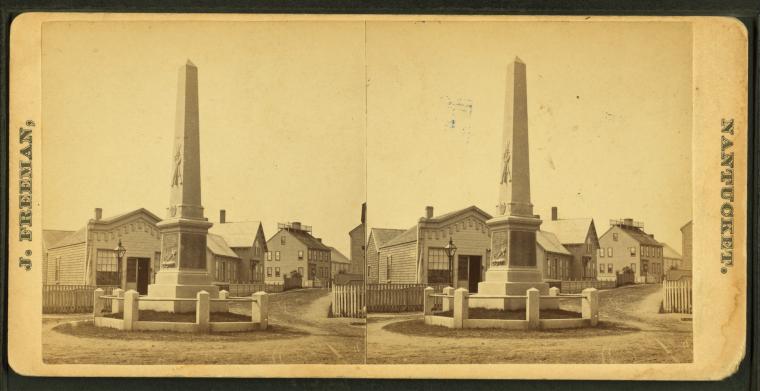
- The Miriam and Ira D. Wallach Division of Art, Prints and Photographs: Photography Collection, The New York Public Library. (1850 - 1930). The Civil War Monument.
Need to keep current, look to the past, teach a topic? The Everett Cafe features daily postings of news from around the world, and also promotes awareness of historical events from an educational context. Be sure to check additional Cafe News postings on the library blog.