Research Buzz: Reporting Back on Fall Conferences
Reporting Back from Fall Conferences
November has been a busy month! I presented at two academic conferences related to librarianship, anthropology, and education. In this Research Buzz post, I’ll give a recap of my presentations.
1. LOEX
The LOEX Fall Focus 2025 was an online information literacy and library instruction conference designed to concentrate on a few high-interest topics in the academic library community. The conference was structured around three specific areas that are salient in libraries today: Artificial Intelligence (AI), Archives & Special Collections, and Sense of Belonging.
I co-presented to an audience of 50 peers with Columbia librarian, Dan Woulfin. Our presentation details are found below.
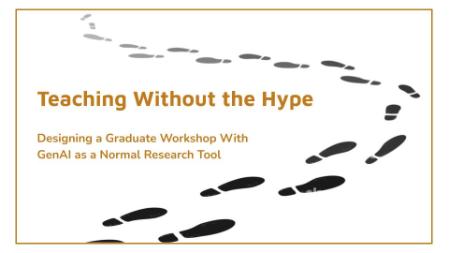
Teaching Without the Hype: Designing a Graduate Workshop With GenAI as a Normal Research Tool
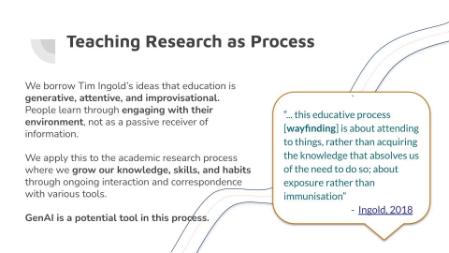
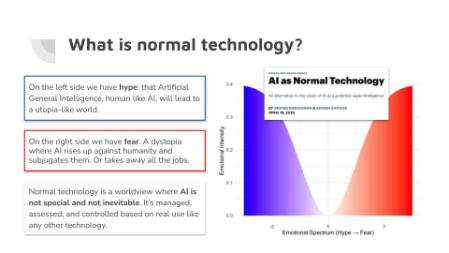
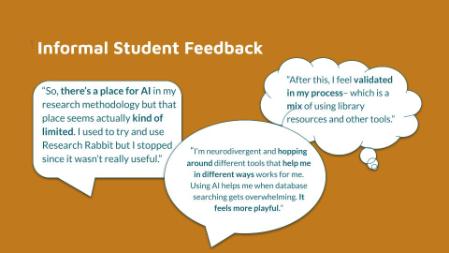
In an academic environment where GenAI is hyped, criticized, and widely used, this session demonstrated how to integrate it into library instruction as “normal technology.” We shared reflections from designing hands-on workshops where students experienced how GenAI works side-by-side with established research methods like Boolean search and citation mining. We emphasized research as a nonlinear, wayfinding process, helping students bridge their daily information habits with information literacy skills common in formal academic work. Attendees gained practical strategies for embedding a process-oriented approach to AI instruction and designing their own sessions that responsibly incorporate GenAI alongside other research tools.
See some of the slides from the presentation below.
You can view the full thing here: https://bit.ly/AK-DW-LOEX-2025
2. American Anthropological Association 2025 Annual Meeting
The American Anthropological Association (AAA) Annual Meeting in 2025 was centered around the theme of "Ghosts." The meeting took place in New Orleans, Louisiana (November 19–23, 2025), a city often noted for its own reputation as "the most haunted city in America," providing a fitting backdrop for the theme.
The "Ghosts" theme was used as a powerful and broad metaphorical and literal lens to examine the core concerns of contemporary anthropology. Themes included: the past haunting the present, decolonization and critical theory, social and political hauntings, and communication and possibility.
I co-presented alongside inspiring educational anthropologists on a panel entitled:
Paranormal Panoptic Activity: New Surveillance Mechanisms in Educational Contexts.
Here is a summary of our group panel:
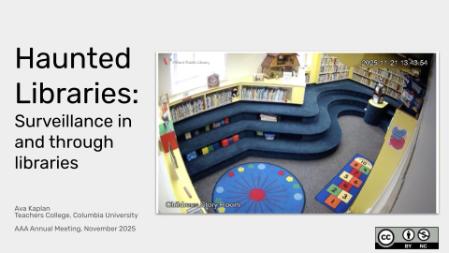
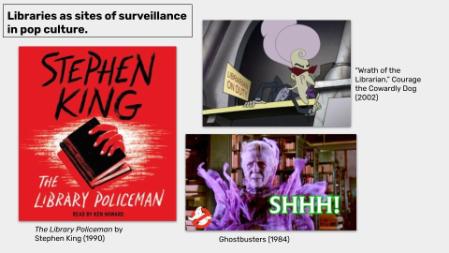
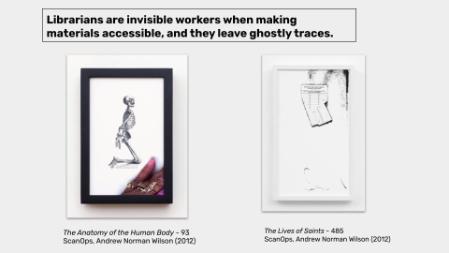
Under threat of "learning loss" during COVID-19, we experienced a collective desensitization to public surveillance of private lives (Stacy & Casar, 2023), allowing new panoptic technologies to evolve amidst an increasingly autocratic society. Today's political climate has only intensified draconian educational surveillance, forging new techniques of discipline for systems, curricula, and people challenging oppressive ideology. The quiet background hum of panoptic ghosts present in schools since inception has progressed to a more aggressive haunting of surveilling forces across all facets of educational life - and beyond. Without documentation and critical analysis of how panopticism is infiltrating education, what was once considered extreme "paranormal" activity will simply become normalized, giving "power of mind over mind" so that humans reform themselves to align with dominant forces (Foucault, 1977, p. 206). In this round table, scholars draw upon anthropological perspectives to delineate mutating surveillance tactics that are being used to advance and normalize extremist ideologies that disenfranchise marginalized communities. Mike Karlin explores how emerging education technology and generative artificial intelligence seek to continuously, unquestioningly gather, sell, and exploit student and classroom data with those outside the classroom, presenting a significant danger for both students and teachers, particularly for those who hold marginalized identities and beliefs, as they unknowingly share private information to be used in undisclosed manners. Ted Hamann discusses how Project RAÍCES, a multi-pronged home-grown teachers of color initiative, was accused of being 'pro-DEI' and abruptly cancelled by DOGE. He analyzes this disciplining and the institution's uneven response. Sepideh Yasrebi examines how technological and institutional surveillance tactics 2025 Annual Meeting: Ghosts 1112 Report Corrections enforce linguistic policing through hegemonic pedagogies, ultimately erasing emergent bilinguals' rich linguistic and cultural repertoires and identities. Jen Stacy depicts how Moms for Liberty has appropriated the concept of "parents' rights" to usurp democratic ideals of local control, morph regulation with censorship, and legitimize a new brand of sociocultural panopticism. Ava Kaplan considers the ways libraries are haunted sites caught between privacy and surveillance, normalization and transgression, by unpacking how librarians' feelings of paranoia materialize in self-censoring behavior and quiet resistance with regards to books about LBBTQ+ and People of Color. Jessica Sierk investigates novel forms of surveillance within sexual and reproductive healthcare that emerged leading up to and since the U.S. Supreme Court overturning Roe vs. Wade and their chilling effect on formal and informal public health education. Confronting today's panoptic ghost raises critical consciousness to dismantle current and prevent new forms of radical surveillance.
Presenters: Edmund Hamann, University of Nebraska, Lincoln, Department of Anthropology, Jessica Sierk , Jen Stacy, University of New Mexico, Mike Karlin, California State University, Dominguez Hills, Ava Kaplan, Teachers College Columbia University, Sepideh Yasrebi, University of New Mexico
See a few slides from this presentation below.
The full deck can be viewed here: https://docs.google.com/presentation/d/1U4wrI9o4lHXs0u64d4jS9ue9e6EoOHBhSIIDVupVaOo/edit?usp=sharing
I would love to speak further about any of the information shared here– don’t hesitate to reach out (ak3588) if you’d like to chat more.