How a Newspaper is Made - Journalism as Industry in Children's Literature
There is a subgenre of children’s literature that functions as a vocational primer – books that describe how things are made and who makes them in a way that is accessible, interesting, and informative. Much like the documentary-style videos from the crayon factory that aired on children’s television, these books offer instruction through storytelling and pictures as a kid-friendly entry point into the grown-up world of the workplace.
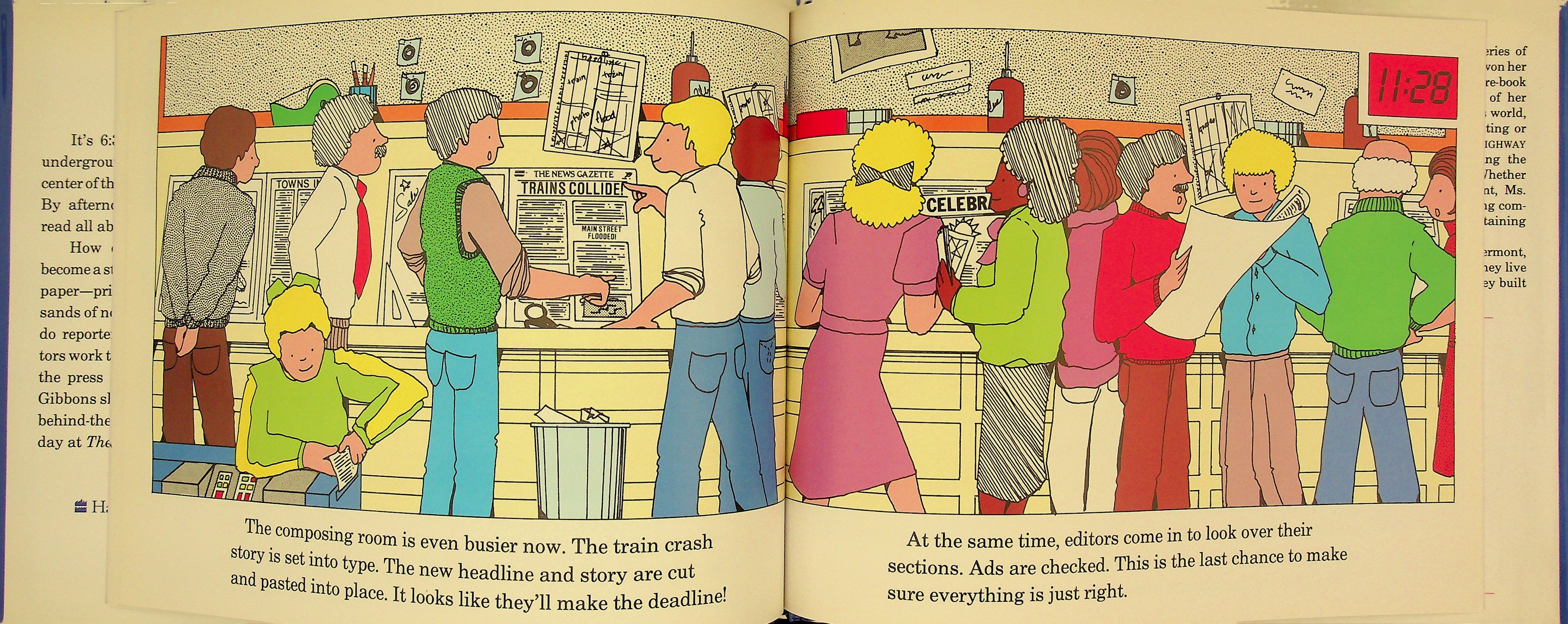
The Gottesman Libraries has seven different books in the juvenile literature collection that focus specifically on print journalism and newspaper production, including the fascinating titles, “Deadline! From News to Newspaper,” written by Gail Gibbons and published in 1987, Henry B. Lent’s “I Work on a Newspaper,” published in 1952, and “Your Daily Paper,” written by John J. Floherty and published in 1938.
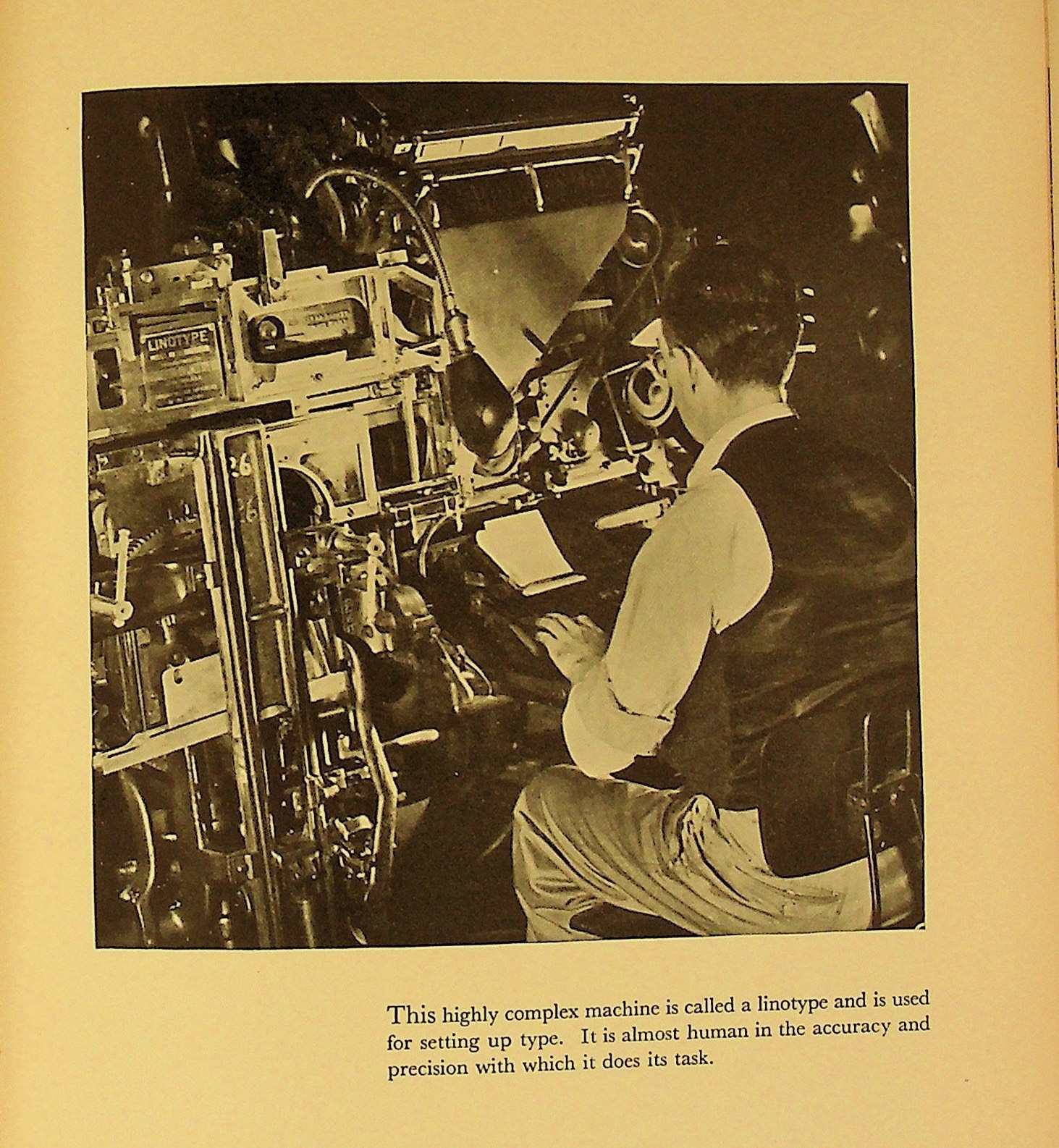
The information in these books is presented with clarity and enthusiasm, generously delivering factual details without feeling like textbook copy, and written in an energetic and accessible tone meant to engage and educate young readers. Each book offers a lens into a different era of the history of print journalism, inviting children into the exciting world of newspapers. A full chapter of Lent’s book is dedicated to the linotype - a composing machine that was the model of precision and efficiency in the 1950s. With the touch of each key, molten metal would flow into tiny type-sized molds to create perfect lines of copy. Lent writes:
What wonderful machines these typesetters are! They reach almost up to the ceiling. The keyboard of each one looks very much like that of a typewriter with all the letters of the alphabet and the other characters and numbers that can be printed with a typewriter.
Headline type was still largely set by hand, and compositors would load metal type into a little device simply called a “stick” using a technique that required them to quickly and accurately build words backwards, letter-by-letter, pulling from a massive cabinet of letterforms called a case. In “Your Daily Paper,” Floherty explains how the placement of capital and small letters became referred to as “upper and lowercase” letters due to their placement in the compositors cabinet.
In these books, photography is discussed with an air of mystery and intrigue. Floherty vividly describes the newspaper engraving shop as a place where images are morphed, manipulated, and transferred to glass, film, metal, and paper
The engraving shop of a newspaper is a thrilling place, where strange lights vie with weird shadows. The shrill screams of the circular saws as they bite through metal blend with the buzz and hum of ingenious machinery. The pungent smells of acids and other chemicals are mixed with the odor of hot metal. Men busy themselves at strange rites. Sheets of glass, on each a photographic image, stand in racks, like a crystal card index. Hidden away in the darkness dispelled only by a glimmer of ruby light, men toil over vats and trays as they bring forth photographic images on glass and metal by a mysterious alchemy.
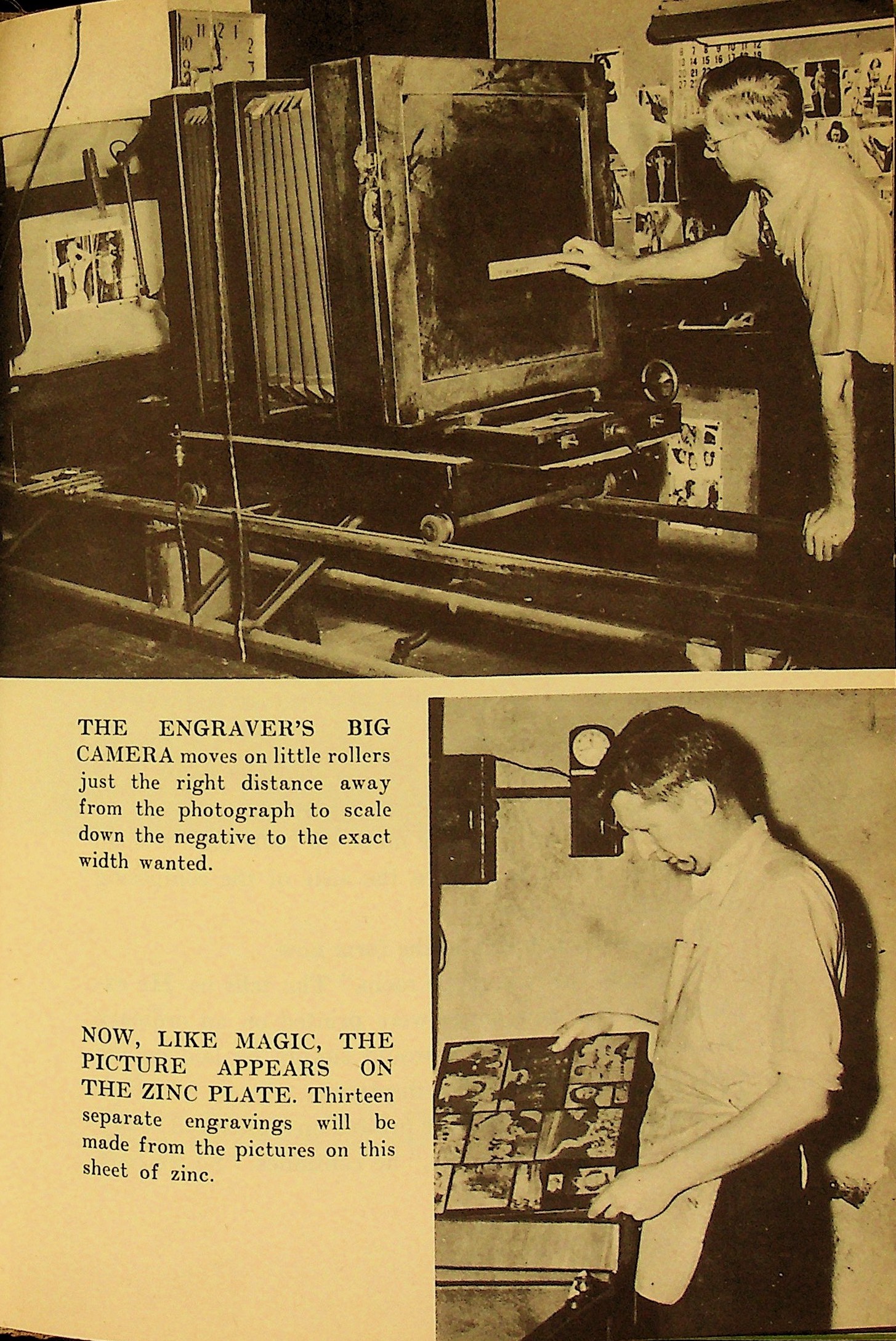
While this depiction of the photographic process is not that far from the more modern black and white darkrooms and direct-to-plate commercial offset technology of Gibbon’s “Deadline!” - it’s a fascinating look into the evolution of pre-press production and early analog image editing practices. These descriptive and engaging breakdowns of complex industrial processes undoubtedly sparked a sense of curiosity in the minds of young readers, and offered an important insight into how the images and text, when organized thoughtfully and intentionally, could become meaningful stories about the world in which they and their families were living their everyday lives.
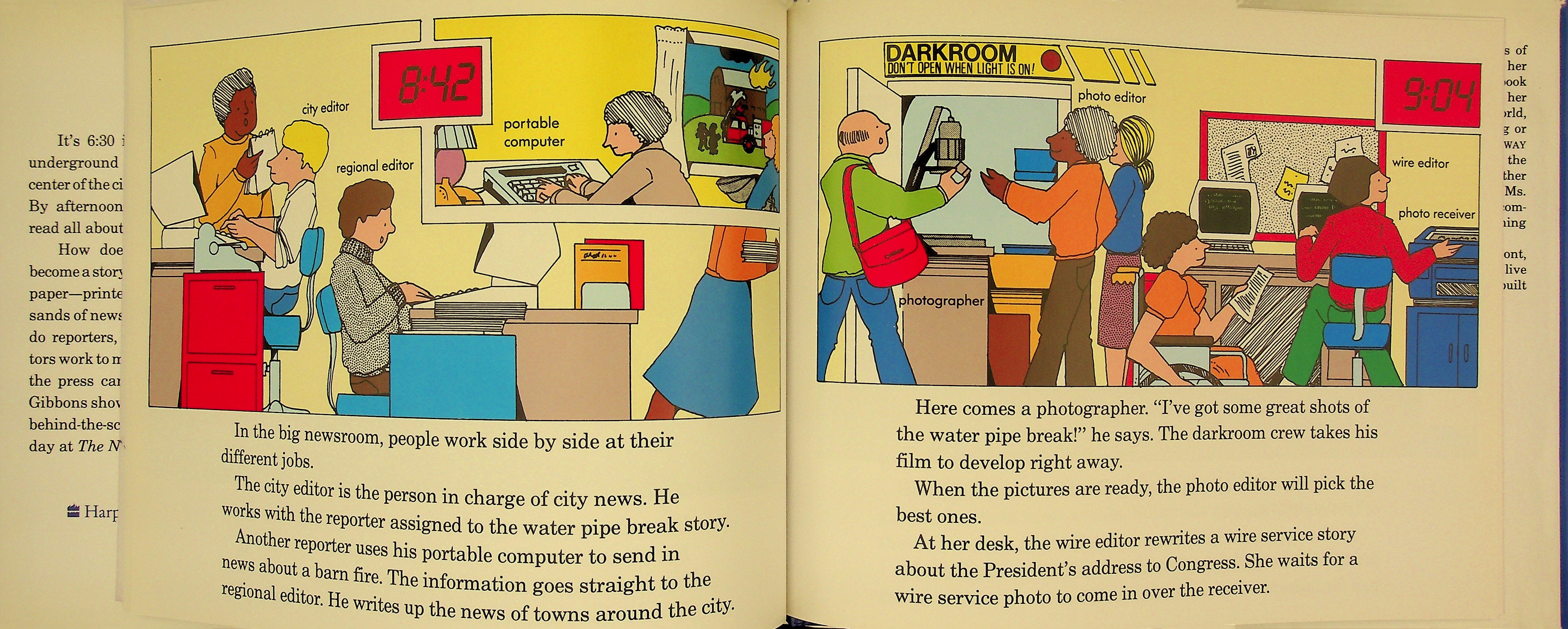
Spanning over 50 years and showing a deep admiration and respect for the practice and processes of daily print publications, these books approach and explain journalism as a full industry extending far beyond writing headlines and chasing leads. There are grainy pictures of enormous printing presses and people smoking cigarettes while hunched over desks covered in piles of paper. Colorful illustrations show crews of happy compositors mocking up the day’s galleys to proof. Images in black and white capture photographers carrying their giant 4x5 cameras into the darkroom to process the images that will accompany the lead story. These books were meant to capture the imagination of a child and encourage them to see themselves as part of a team that was literally making headlines – whether as a writer, an editor, a photographer, a press operator, a columnist, or a typesetter. In these books, the story of the newspaper is that everyone had an important role to play in getting the news to the people, and that was an honest and exciting way to make a living.
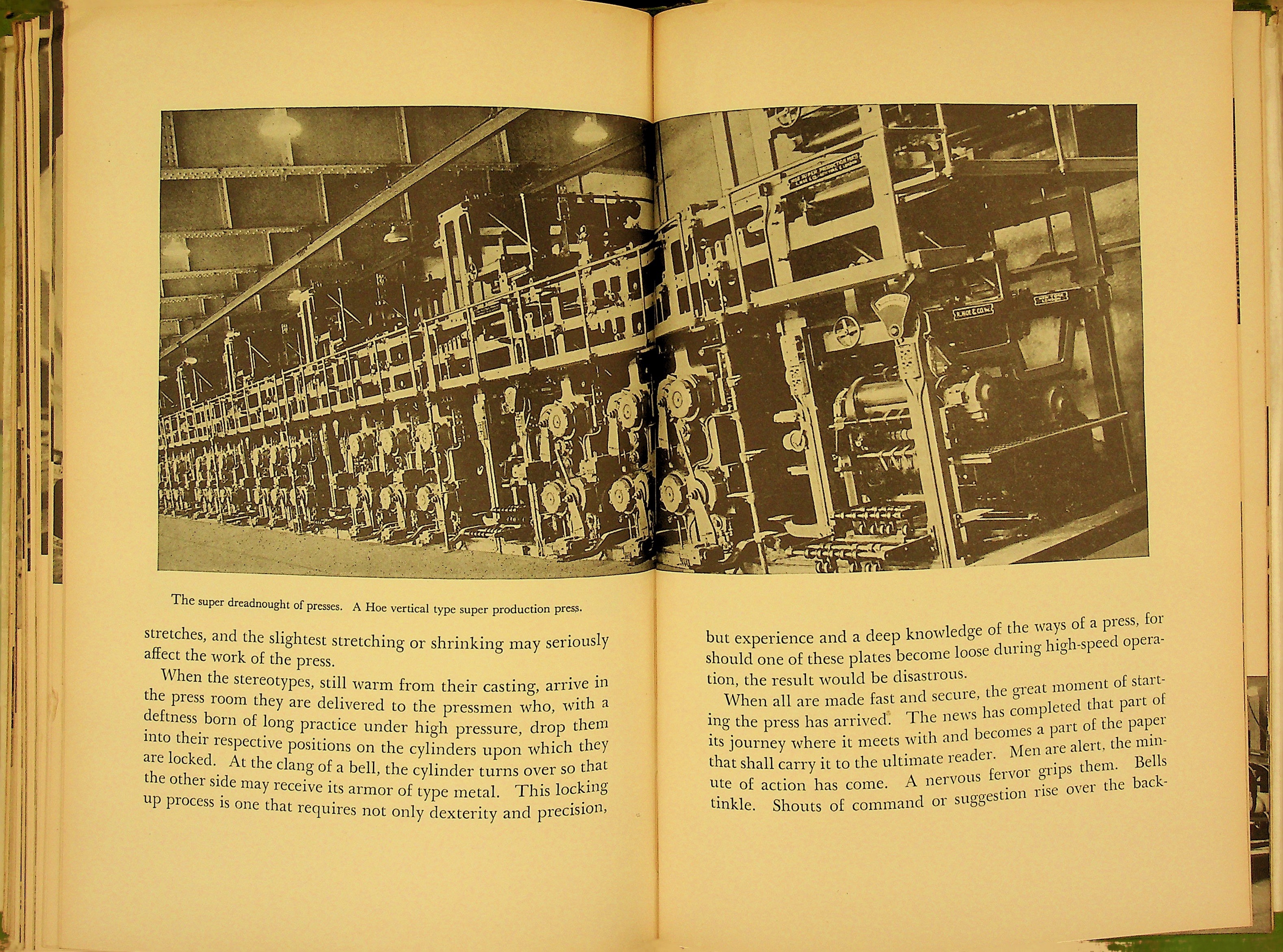
Image Sources
Image 1: Illustration depicting newspaper staff creating the newspaper layout. From “Deadline! From News to Newspaper”.
Image 2: Black and white photograph depicting staff working a Linotype machine. From “Your Daily Paper".
Image 3: Black and white photograph depicting newspaper worker using an engraver's camera. From “I Work on a Newspaper”.
Image 4: Illustration depicting newspaper staff in production. From “Deadline! From News to Newspaper”.
Image 5: Black and white image depicting a super production press. From “Your Daily Paper".