Today In History: Michaelmas Day
The abundance of windows meant that the great room was cheered by a constant diffused light, even on a winter afternoon. The panes were not colored like church windows, and the lead-framed squares of clear glass allowed the light to enter in the purest possible fashion, not modulated by human art, and thus to serve its purpose, which was to illuminate the work of reading and writing. I have seen at other times and in other places many scriptoria, but none where there shone so luminously, in the outpouring, of physical light which made the room glow, the spiritual principle that light incarnates, radiance, source of all beauty and learning, inseparable attribute of that proportion the room embodied.
-- Umberto Eco, The Name of the Rose
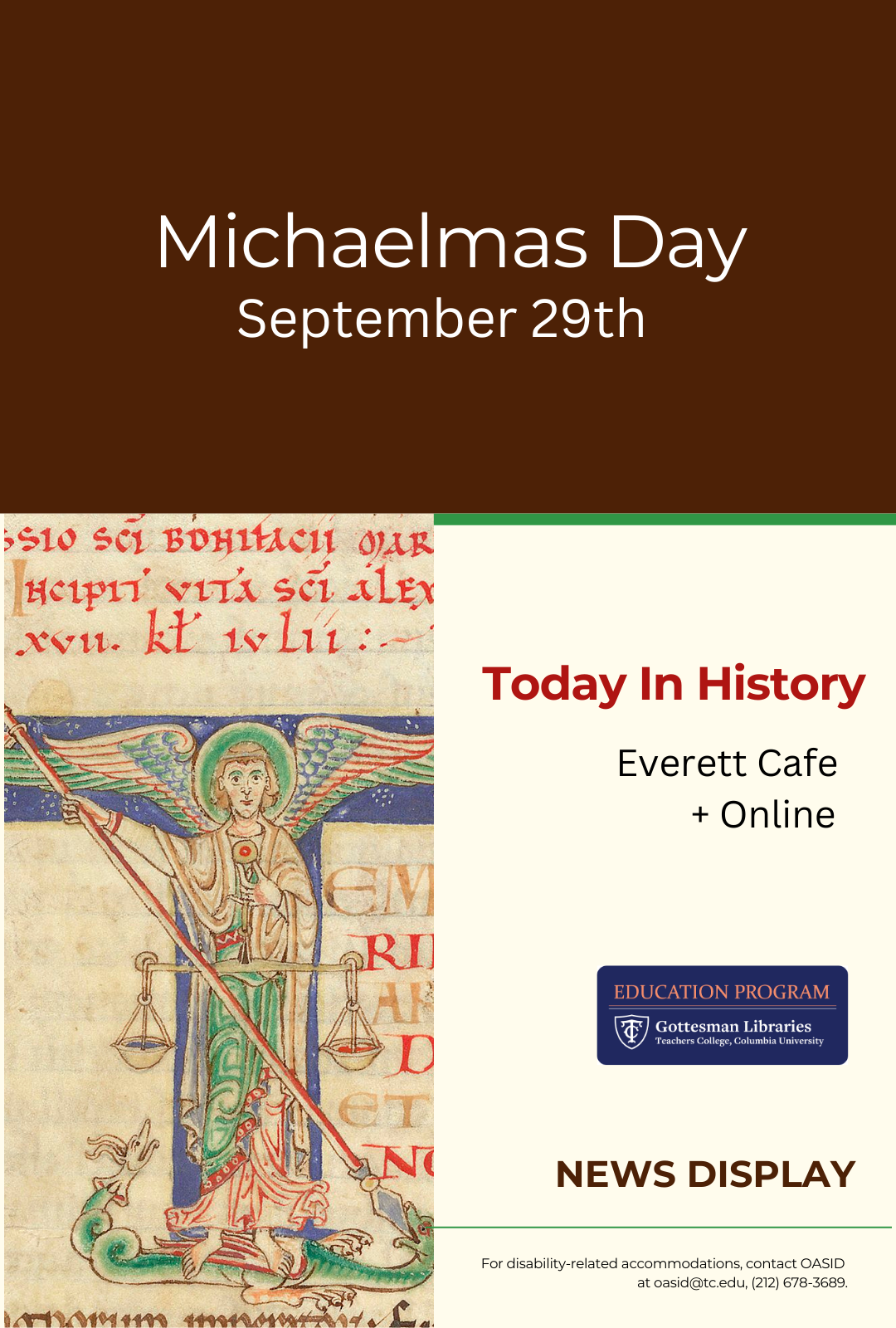
Observed annually on the 29th of September, Michaelmas Day likely dates as far back as the 5th century Rome, and is also known as the Feast of Saint Michael and All Angels who comprised the heavenly army that battled with swords and shields against Satan, typically depicted as a dragon. It also commemorates the end of summer, beginning of Autumn, and completion of the harvest. In universities and colleges, particularly in the United Kingdom, the Fall or First Term of the academic year is called Michaelmas Term -- a long tradition that reflects the history of higher education with its religious roots; the earliest universities in the West (Europe and later in the United States) emerged from Christianity, with monks undertaking research and scholarship in their quest for higher knowledge.
Some may recall Umberto Eco's global best seller, The Name of the Rose / Il Nome della Rosa, an intriguing historical and intellectual murder mystery written in 1980 but set in a 14th-century northern Italian monastery. Gothic cathedrals, which often had rose windows, or large circular, stained-glass windows in their facades and transepts, tended to allow the sun pass through them, letting light fall upon the altar on Michaelmas Day. While the archangel Saint Michael led the fight for good over evil, guiding and enlightening souls at their hour of death, the most learned monks and main characters in Eco's novel seek out the library and its archives, akin to a labyrinth and containing forbidden and lost reading -- namely Aristotle's second book of Poetics -- to both hide and find the truth.
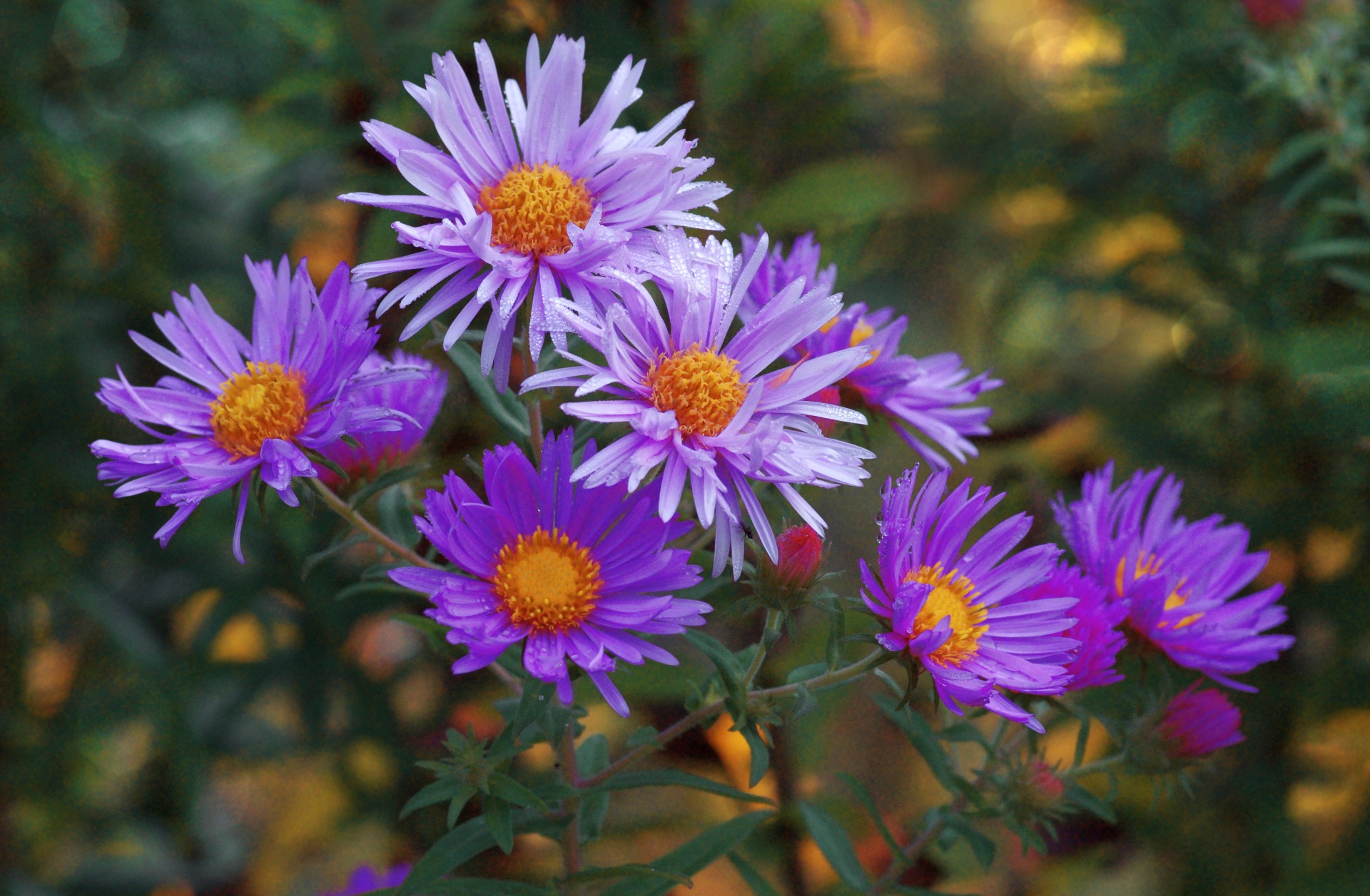
Another interesting tradition is that Michaelmas daisies are so called because they typically peak in bloom around September 29th. Of the aster family and in cheerful, vibrant shades of purple, blue, pink, and white, they flower from August to October; can be used for culinary and medicinal purposes; and are a favorite in many gardens, from medieval times to the present day.
The following articles are drawn from Proquest Historical Newspapers, which informs and inspires classroom teaching and learning.
- Opening of a New School. (1879, Oct 01). The Times of India (1861-)
- Religious Intelligence. (1880, Nov 13). The Sun (1837-)
- Irish, M. (1891, Oct 03). Michaelmas Day: Various Sources. Weekly Irish Times (1876-1920)
- Michaelmas Day: A Great Festival in the Roman Catholic and Episcopal Churches. (1885, Oct 02). The Austin Daily Statesman (1880-1889)
- Indian Summer: The Literature Is as Hazy as Its Delightful Atmosphere. (1894, Dec 15). Austin Daily Statesman (1891-1902)
- Will Observe Michaelmas Day. (1914, Sep 29). The Washington Post (1877-1922)
- Education Notes. (1918, Oct 11). The Christian Science Monitor (1908-)
- Fabquharson, D. (1920, Oct 02). Michaelmas Day. The Scotsman (1860-1920)
- Saint Michael and All Angels. (1922, Sep 29). Nashville Tennessean (1920-1922)
- Michaelmas Day. (1941, Oct 01). The North - China Herald and Supreme Court & Consular Gazette (1870-1941)
Tips:
- Howard, Keble. Come Michaelmas, a Play in One Act, by Keble Howard [Pseud. S. French; S. French, ltd., c1909, 1909. e-book.
- Middleton, Thomas, and Martin Wright Sampson. Thomas Middleton (Michaelmas Term, A Trick to Catch the Old One, A Fair Quarrel, The Changeling). Edited by Martin W. Sampson. American Book Company, 1915. Closed Stacks Curr ; PR2711 .S26 1915.
- Thompson, W. Halliday. Professor Huxley and Religion. Gresham Lectures, Michaelmas Term, 1904. H.R. Allenson, 1905, 1905. e-book.
- University of Cambridge. Cambridge University Examination Papers Michaelmas Term, 1876 to Easter Term, 1877. University Press, 1877. History of Education Collection, Monographs and Manuscripts.
- University of Cambridge. Cambridge University Examination Papers Michaelmas Term, 1877, to Easter Term, 1878. University Press, 1878. History of Education Collection, Monographs and Manuscripts.
Images:
- Aster Flower, PublicDomainPictures.net.
- St Michael, Canva.
Need to keep current, look to the past, teach a topic? The Everett Cafe features daily postings of news from around the world, and also promotes awareness of historical events from an educational context. Be sure to check additional Cafe News postings on the library blog.