Today In History: Yellowstone Becomes the First National Park
Just as Yellowstone was the birthplace of the idea of a national park, it was the birthplace of this project, years before, when I watched wolves battle grizzly bears over an elk carcass in the Lamar Valley. I realized then that the reason I could witness such an unforgettable event was that a political decision had been made to return wolves to the park, and I wondered whether the wolf project signaled a new way of thinking about and managing parks and other natural areas...
-- William R. Lowry, Repairing Paradise, p.226.
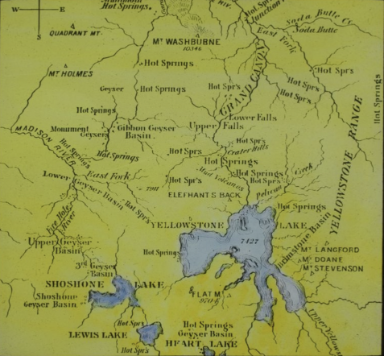
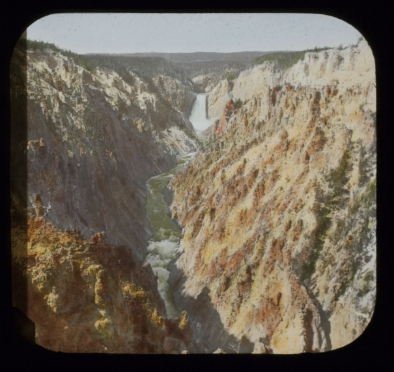
On March 1st, 1782 President Ulysses S. Grant, Vice President Schuyler Colfax, and Speaker of the House James G. Blaine signed an Act of Dedication in which the land near the Yellowstone River became a public park. Located in the northwest corner of Wyoming, as well as in parts of Montana and Idaho, Yellowstone was the first national park in the United States -- one abundant with wildlife, geysers, lakes, forests, canyons, and mountain ranges -- spanning an area of nearly 3,500 square miles or 2.2 million acres. In 1978 Yellowstone National Park was named a UNESCO World Heritage Site, famed for its natural beauty, bison, and elk. Its human history dates back 11,000 years -- particularly the Native American Tukudika and other tribes -- as shown by archeological sites, trails, and oral histories. Its name is believed to have come from the yellow rocks in the Grand Canyon of the Yellowstone, the first large canyon (twenty-four miles long) on the river downstream from the falls in Wyoming.
Despite annual forest fires, including the largest in 1988 that destroyed over one third of the land, efforts to preserve the natural and cultural resources of Yellowstone are significant; programs cover wildlife protection, restoration of the ecosystem, renewable energy conservation, bear safety, bison and native fish conservation.
Balancing conservation is funding from tourism. Yellowstone draws an average of four million visitors a year, including the winter months when skiing and snowshoeing are popular. It is ranked as one of the top national parks in the United States, having set the stage for the recognition of public land to drive environmental conservation; build local and national economies; preserve cultural heritage; and inspire scientific research.
The following articles are drawn from Proquest Historical Newspapers, which informs and inspires classroom teaching and learning.
- The Yellowstone National Park: Its Extension and Maintenance -- Action by the Senate. (1892, Jun 06). Chicago Daily Tribune (1872-1922)
- The Yellowstone National Park in Winter. (1911, Apr 08). The Hartford Courant (1887-1922)
- Touring Time: And a Bt of Paradise --- The Famous Cody Road into Yellowstone National Park. (1917, Jul 15). Chicago Daily Tribune (1872-1922)
- Tourists Delight in Sights of Yellowstone National Park: Wind Cave and Sully's Hill Are Two Areas Which Also Furnish Much Enjoyment and Knowledge to Tourists in America. (1928, Apr 15). New York Herald Tribune (1926-1962)
- Tourist Season Opens June 20 at Yellowstone: Largest and Oldest National Park Expects Record Crowds Through Sept. 10 : Yellowstone National Park Area Has Many Attractions for Summer Visitors. (1947, May 04). New York Herald Tribune (1926-1962)
- 100 Years Young: Yellowstone National Park. (1972, May 22). The Austin Statesman (1921-1973)
- Bukro, C. (1982, May 30). Exploring Yellowstone National Park: See It Like a Native--an Elk. Chicago Tribune (1963-1996)
- Dellios, H. (1994, Nov 25). Plan for Mine Near Yellowstone Stirs Debate on 1872 Law. Chicago Tribune (1963-1996)
- Harvey, R. (1995, Dec 10). Yellowstone in Winter: Seeing--and Skiing--an Enchanted Land. Chicago Tribune (1963-1996)
- Booth, W. (2008, Mar 30). Prairie Home Companions: Once Slaughtered Close to Extinction, the Buffalo Roam Again Across the Fields of Yellowstone National Park. Now They Have a Ghost of a Chance. The Washington Post (1974-)
Tips:
- Boner, Bradly J, and William Henry Jackson. Yellowstone National Park Through the Lens of Time. University Press of Colorado, 2016. e-book.
- Buskirk, Steven. Wild Mammals of Wyoming and Yellowstone National Park. 1st ed., University of California Press, 2016. e-book.
- Lowry, William R. Repairing Paradise: The Restoration of Nature in America’s National Parks. 1st ed., Brookings Institution Press, 2009. e-book.
- National National Research, et al. Ecological Dynamics on Yellowstone’s Northern Range. 1st ed., National Academy Press, 2002. e-book.
- Wallace, Linda L. After the Fires : The Ecology of Change in Yellowstone National Park. 1st ed., Yale University Press, 2004. e-book.
- Yochim, Michael J. Protecting Yellowstone : Science and the Politics of National Park Management. 1st ed., University of New Mexico Press, 2013. e-book.
- Yellowstone National Park, D.&T. Map of Park. 1930. Rothman Lantern Slide Collection. Courtesy of Teachers College, Columbia University.
- Poster Image: Yellowstone National Park, Canva.
- Yellowstone National Park, D&T, Great Falls. 1930. Rothman Lantern Slide Collection. Courtesy of Teachers College, Columbia University.