Today In History: Discovering King Tut's Tomb
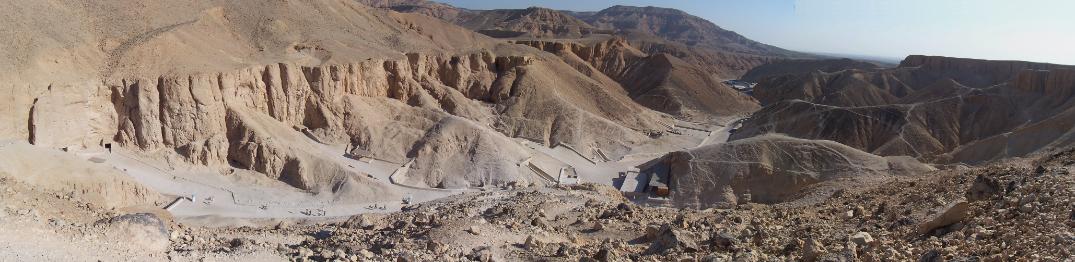
Ancient wisdom may boast of the spice and the weed,
Which embalmed the cold forms of its heroes and sages;
But their fame lives alone on the leaf of the reed,
Which has grown through the clefts in the ruins of ages.
-- Robert Treat Paine, The Papyrus, in Poems of Places
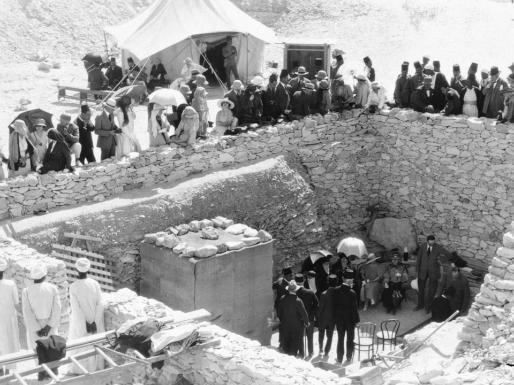
On November 4th, 1922, British archaeologist Howard Carter and his team discovered a step leading to the entrance of the tomb of King Tutankhamen in the Valley of Kings. Carter had been looking for the tomb since he arrived in Egypt in 1891 and he was about to begin the extensive process of uncovering the four-room burial chamber, complete with thousands of precious objects, and known as KV62, which followed the entrance staircase and corridor. In addition to coffins, furniture, clothing, and jewelry, Carter and fellow archaeologist Lord Carnarvon found a stone sarcophagus that held three nested coffins; the final coffin, made of pure gold, contained the preserved body of the young nineteen-year king and dated back 3,000 years.
King Tut is believed to have died from either an infected broken leg (possibly from a chariot crash), malaria, or degenerative bone disease brought on by vulnerable health in his royal, but inbred family. Ascended to the throne at the age of nine, he ruled only from 1333 BCE until his death in 1323 BCE. King Tutankhamen's tomb is considered highly significant in providing ground-breaking insight into ancient Egypt, its culture, art, and burial practices. The contents of his tomb, located on the West Back of Luxor among over 60 royal tombs, were first exhibited at the Smithsonian Gallery of Art in 1961, making the treasures, housed at the Museum in Cairo, known to great acclaim, internationally. Treasures of Tutankhamen toured the United States from 1972-1981, with 55 artifacts, including his solid gold funerary mask, gilded statues, jewelry, chests, and ritual objects.
The "Curse of the Pharaohs" implies that anyone who disturbs an ancient Egyptian king’s tomb will suffer misfortune, illness, or even death -- and some believe that Howard Carter himself was prone to ill fate, as he died at the relatively young age of 64 in 1939.
The following articles are drawn from Proquest Historical Newspapers, which informs and inspires classroom teaching and learning.
- Carter, H. Tomb of King Tut Described. (1924, May 27). Cincinnati Enquirer (1923-)
- Tutankhamen's Treasure Said to be Stolen: English Expert Declares Ancient King Robbed His Predecessor's Tomb. (1932, Apr 17). Chicago Daily Tribune (1923-1963)
- Dugan, J. U. (1934, Jan 28). Death of Twentieth 'Victim' Recalls Curse of King Tut: While Scientists Scoff, Mystics of Land Add Name of E. P. B. Weigall, Famous Egyptologist, to List 'Visited by Vengeance' of Boy King. Chicago Daily Tribune (1923-1963)
- Carter, King Tut Tomb Discoverer, Is Dead. (1939, Mar 03). Daily Boston Globe (1928-1960)
- Finder of Tomb Of King Tut Dead: Howard Cater, Egyptologist, Succumbs In London Home at 66. (1939, Mar 03). The Sun (1837-)
- Bartlett, K. (1952, Oct 26). 30 Years Ago a King, Dead 3500 Years, Put His Stamp on World. Daily Boston Globe (1928-1960)
- Wattts, G. W. (1973, Mar 04). Seeking King Tut's Land. The Washington Post, Times Herald (1959-1973)
- Moorhead, J. (1977, May 05). It Took Me 3,300 yrs., 6 Hrs., 29 Min. to See King Tut: Chronicle of 'Aeons' No. 006765 Issued Long, Dark Passage..The Christian Science Monitor (1908-)
- Wallach, A. (1978, Dec 10). Tutmania: The Tut Glut of Merchandise: How Much Is Tomb Much. Newsday (1940-)
- Erlandson, R. A. (1980, Sep 15). For 10 Years, He Shared Tomb with King Tut. The Sun (1837-)
Tips:
- Alkire, J. (2018). Investigating Tombs and Mummies. (1st edition). ABDO Publishing Company. e-book.
- Demi. (2009). Tutankhamun (First edition). Marshall Cavendish Children. Curriculum ; DT87.5 .D36 2009.
- Eaton-Krauss, M. (2020). The Unknown Tutankhamun. Bloomsbury Academic. e-book.
- North, M. (2023). Reading 1922 : A Return to the Scene of the Modern (1st edition). Oxford University Press. e-book.
- Puigdevall, F. (2018). The Secrets of Ancient Tombs : Tutankhamun’s Tomb and Other Ancient Tombs. (1st edition). Cavendish Square. e-book.
Images:
- Panorama of the Valley of the Kings, by Nikola Smolensky, 2008. Wikimedia Commons.
- Poster Image: Entrance to King Tut's Tomb. Canva.
- Tourists Outside Tutankhamun's Tomb, February 2023., by Maynard Owen Williams. Wikimedia Commons.
Need to keep current, look to the past, teach a topic? The Everett Cafe features daily postings of news from around the world, and also promotes awareness of historical events from an educational context. Be sure to check additional Cafe News postings on the library blog.