Today In History: World Food Day
Each food item in a typical U.S. meal has traveled an average of 1,500 miles....If every U.S. citizen ate just one meal a week (any meal) composed of locally and organically raised meats and produce we would reduce our country's oil consumption by over 1.1 million barrels of oil every week.
-- Barbara Kingsolver, Animal, Vegetable, Miracle: A Year of Food Life (Harper Collins Publishers, 2007).
October 16th is World Food Day, marked by the founding of the United Nations' Food and Agricultural Organization (FAO) in Quebec City in 1945 and its efforts to combat hunger and malnutrition, especially in times of war and conflict. Organizations and institutions throughout the world continue to recognize the importance of food security, a healthy diet, and the complexity of production, particularly when sustainability is vital and innovation is needed.
Since 1981, with the launch of "Food Comes First" through to 2026, with "Innovate Today, Nourish Tomorrow", activities of World Food Fay have raised awareness and interest. This year the main focus is on using data, technology, artificial intelligence, and indigenous wisdom to transform agrifood systems, build resilience, and improve sustainable access to nutritious food. However large or small, innovation can help feed the world, protect the planet, and create a better future for all. From IoT (Internet of Things) sensors, drones, and machine learning to optimize irrigation, track soil health, and forecast crop yields, to sustainable food packaging, alternative plant-based proteins, sugar reduction, food production at the village level with fair access to locally grown quality foods, there is much to be learned, desired, and applied.
The importance of organically, home-grown produce; eating seasonal foods; and taking responsibility as consumers and citizens are themes expressed by the late Teachers College Professor Emeritus of Nutrition Education Joan Dye Gussow in her many publications, among them, This Organic Life : Confessions of a Suburban Homesteader (Chelsea Green Pub. Co., Chelsea, 2001) and Chicken Little, Tomato Sauce, and Agriculture : Who Will Produce Tomorrow’s Food? (Bootstrap Press, 1991).
The following articles are drawn from Proquest Historical Newspapers, which informs and inspires classroom teaching and learning.
- Festival to Mark World Food Day. (1981, Oct 15). The Atlanta Constitution (1946-)
- Mitchell, P.P. (1983, Oct 12). World Food Day: Hunger. The Washington Post (1974-)
- Armstrong, S. (1983, Oct 15). World War on Want Goes by Default: Tomorrow Is World Food Day, an Annual Reminder That for Millions Around the World Starvation Is Never Far Away. This Year Natural Disasters Have Exacerbated the Problem But as Sue Armstrong Shows, the Real Crisis Is One of Poverty, Not Scarcity. The Scotsman (1921-2002)
- Swaminathan, M. S. (2009, Oct 06). A Great Scientist and Humanist: The Greatest Hunger Fighter of Our Time Warned Against Complacency, Observing Even Towards the End of His Life That 'the Battle to Ensure Food Security for Hundreds of Millions of Miserably Poor People Is Far from Won.'. The Hindu (1881-2018)
- Leeder, J. (2011, Feb 08). A Warning to Canada: Start Growing. The Globe and Mail (1936-)
- Baby Shower: What Kind of World Awaits the Seven Billionth Person? (2011, Oct 29). The Irish Times (1921-)
- Goering, L. (2012, May 06). 'Green Bullet' Innovations Aim to Feed World of 9 Billion. The Jerusalem Post (1950-)
- Polman, P., & Marc, V. A. (2014, Sep 29). A Food System for the Future: The World Cannot Afford to Talk About Hunger without Addressing Climate Change, Food Production without Sustainability or Growth without Good Nutrition. The Hindu (1881-2018)
- St. John, A. (2026, Oct 06). Budding Food Scrap Pickup Services Spring Up Across US: Composting Coffee Grounds, Eggshells, Carrot Tops, More. Boston Globe (2008-)
- Voorhees, M., & DRUE, B. W. (2026, Sep 24). Here's Why the Seafood on Your Plate Had to Be Imported. The Washington Post (2008-)
Tips:
- Blay-Palmer, A. (2019). Sustainable Food System Assessment : Lessons from Global Practice (1st ed.). Taylor & Francis. e-book.
- Breidlid, A., & Krøvel, R. (2020). Indigenous Knowledges and the Sustainable Development Agenda (1st ed.). Routledge. e-book.
- Brunori, G., & Grando, S. (2020). Innovation for Sustainability : Small Farmers Facing New Challenges in the Evolving Food Systems (1st ed.). Emerald Publishing Limited. e-book.
- Coglianese, C., Finkel, A. M., & Zaring, D. (2009). Import Safety : Regulatory Governance in the Global Economy (1st ed.). University of Pennsylvania Press. e-book.
- La Follette, C., & Maser, C. (2019). Sustainability and the Rights of Nature in Practice (1st ed.). CRC Press. e-book.
- Parham, S. Food and Urbanism: The Convivial City and a Sustainable Future (1st ed). Bloomsbury Publishing Inc, 2015. e-book.
- Steinmetz, G., Bourne Jr., J. K., & Pollan, M. (2024). Feed the Planet : A Photographic Journey to the World’s Food. (1st ed.). Abrams, Inc. e-book.
- Yackel-Juleen, M. L. (2021). Everyone Must Eat Food, Sustainability, and Ministry (1st ed.). Aughsburg Fortress. e-book.
- Yahia, E. (2020). Preventing Food Losses and Waste to Achieve Food Security and Sustainability (1st ed.). Burleigh Dodds Science Publishing Limited. e-book.
Images:
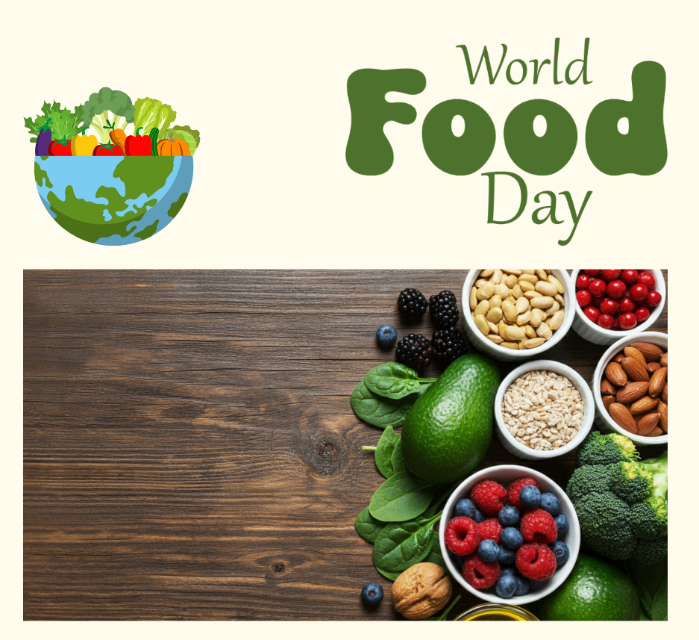
- World Foods, Courtesy of Canva.
- Poster Image: Farm and Field Graphic, Canva.
Need to keep current, look to the past, teach a topic? The Everett Cafe features daily postings of news from around the world, and also promotes awareness of historical events from an educational context. Be sure to check additional Cafe News postings on the library blog.