Today In History: The Autumnal Equinox
To Autumn
Season of mists and mellow fruitfulness,
Close bosom-friend of the maturing sun;
Conspiring with him how to load and bless
With fruit the vines that round the thatch-eves run;
To bend with apples the moss'd cottage-trees,
And fill all fruit with ripeness to the core;
To swell the gourd, and plump the hazel shells
With a sweet kernel; to set budding more,
And still more, later flowers for the bees,
Until they think warm days will never cease,
For summer has o'er-brimm'd their clammy cells.
-- Opening Stanza, To Autumn, by John Keats (composed September 19, 1819)
Marking the official start of Fall in the Northern Hemisphere, the Autumnal Equinox occurs when the Sun passes above the Earth's equator -- this year at 5:04pm on September 22nd. Both day and night are of equal length, and days will gradually become shorter, and nights longer, as we move into typically cooler, seasonal weeks ahead. Autumn Equinox brings cultural traditions and harvest festivals, particularly in rural areas and dating back in history, both mythological and real, from the Greek goddess Persephone's return to Hades, the dark underworld, to the celebrations of early English settlers in America, as precursor to Thanksgiving. In the far north, the northern lights may be viewed, while in other parts of the globe stargazers may eagerly scout out celestial planets, like Mercury. For some, Autumn may signify a time of abundance, transition, impermanence, or equilibrium before Winter sets in, while the undeniable beauty of the changing landscape combines fondly with crisp apples, cozy sweaters, and the early start of the prime holiday season, from Halloween and leading up to the Winter Solstice.
As we settle into the new academic year, we highlight the Gottesman Libraries' second annual Fall Festival, happening this very day! Read more here and be sure to stop by; Learn How to ... Library; and experience the equinox to tune of live library-themed music performed by the Nicholas DiMariaJazz Trio.
The following articles are drawn from Proquest Historical Newspapers, which informs and inspires classroom teaching and learning.
- The September Heavens: Month of the Autumnal Equinox, When the Harvest Mon Delights the Eye. Movements of the Planet Show How the Sun Crosses the Equinoctial -- Mercury's Rapid Oscillation from Morning to Evening Star-- Jupiter a Brilliant Spectacle. (1897, Aug 29). New York Times (1857-1922)
- Scrap Book for Today: Exit, Summer! Autumnal Equinox Comes Tomorrow. (1913, Sep 22). Minneapolis Morning Tribune (1909-1922)
- O, Yes, Autumnal Equinox Is Here: Which Means It's Time to Buy That Hat. (1917, Sep 23). Chicago Daily Tribune (1872-1922)
- Myth of the Equinox Storm Seems Disproved by Charts: Popular Belief That Boisterous Weather Comes When Sub Crosses Equator Is Refuted, the Storm in Literature. (1928, Sep 30). New York Times (1923-)
- The Autumnal Equinox. (1924, Oct 02). The Hartford Courant (1923-)
- Autumnal Equinox: Opportunity to Observe Mercury. (1957, Aug 31). The Scotsman (1921-2002)
- Smiley, P. C. H. (1972, Sep 03). Sun Moves to Equinox on Sept. 22: The Sun. The Hartford Courant (1923-)
- Days to Become Shorter, Nights Longer. (2005, Sep 23). The Times of India (1861-)
- Shaer, M. (2009, Sep 22). The Autumnal Equinox: Myths and Reality. The Christian Science Monitor (1908-)
- Skilling, T. (2015, Sep 20). Warmup Will Coincide with Autumnal Equinox. Chicago Tribune (1997-)
Tips:
- Andrews, R. (2019). This Was Our Pact (First edition.). First Second Books. Juvenile ; PZ7.7.A56 Thi 2019.
- Brockman, T. (2009). The Seasons on Henry’s Farm : A Year of Food and Life on a Sustainable Farm. Surrey Books. e-book.
- Felix, R. (2013). How’s the Weather in Fall? (1st ed.). Cherry Lake Pub. e-book.
- Gibbons, W., & Gibbons, A. R. (2017). Ecoviews Too : Ecology for All Seasons (1st ed.). The University of Alabama Press. e-book.
- Markle, S. (1991). Exploring Autumn : A Season of Science Activities, Puzzlers, and Games (First edition.). Atheneum. Curriculum ; QH81 .M2654 1991.
- Miller, T., & Vizetelly, H. (1856). The Country Year Book : Descriptive of the Seasons, Rural Scenes and Rustic Amusements; Birds Insects, and Quadrupeds. H.G. Bohn. Closed Stacks Juvenile ; PZ7.M637 Co2 1856.
Images:
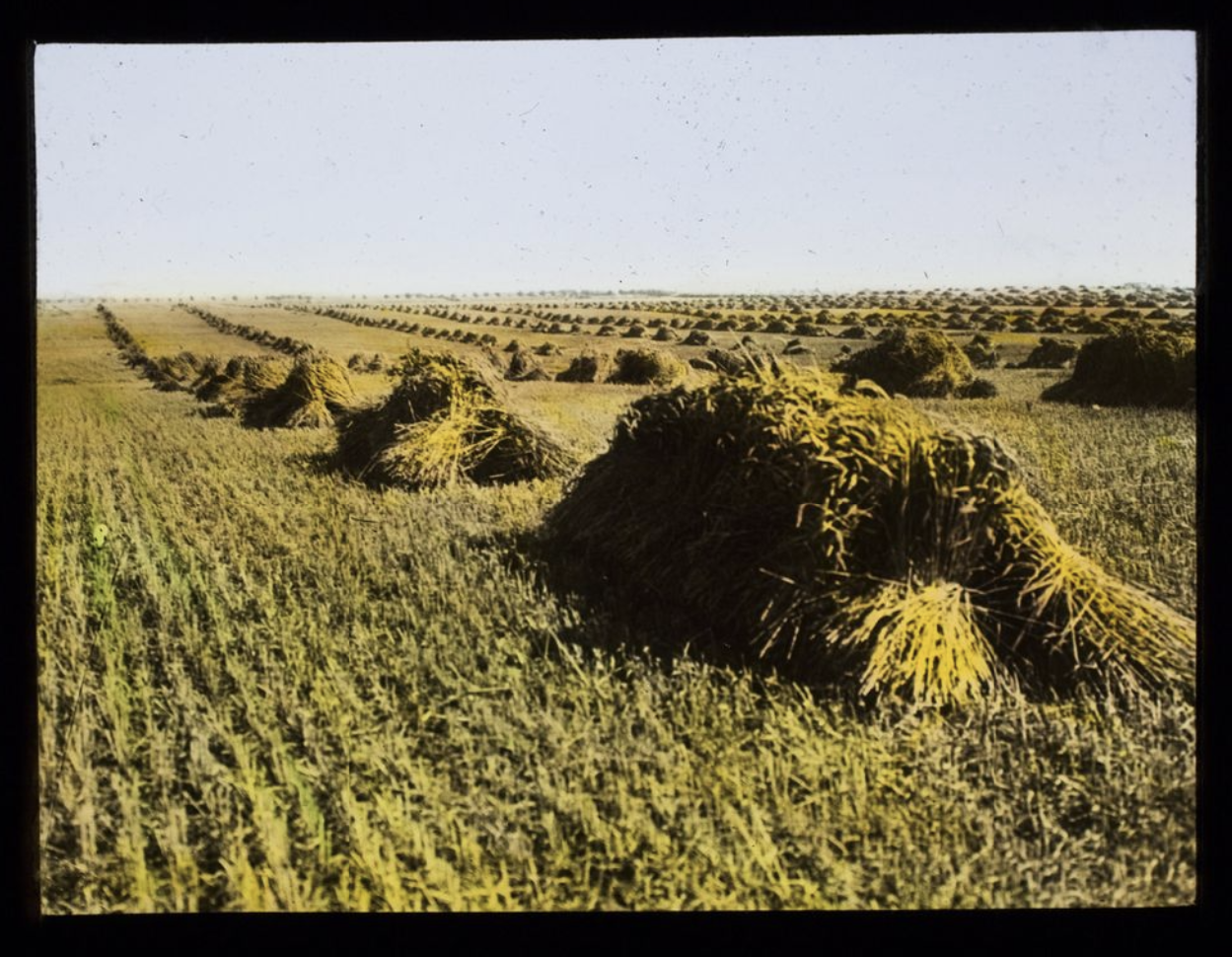
- Harvest Field, circa 1930-1940. From the Rothman Lantern Slide Collection, Courtesy of Teachers College, Columbia University.
- Poster Image: Fall Leaves, Canva.
Need to keep current, look to the past, teach a topic? The Everett Cafe features daily postings of news from around the world, and also promotes awareness of historical events from an educational context. Be sure to check additional Cafe News postings on the library blog.